

Empowering Iowans Against Disinformation
Confronting the Iowa GOP's Assault on Media Literacy Education
Amid a flood of misinformation, Iowa's educational future is at risk due to the regressive policies of Governor Kim Reynolds and the state GOP. As they continue to impose draconian restrictions on educational content, they jeopardize the very essence of informed citizenship and democratic participation.
In my previous article, I wrote about the growing problem of the spread of misinformation on social media and the internet, and the risk it poses to democracies worldwide:
From Enlightenment to Obscurity: Are We Spiraling Toward a New Dark Age?

In an era where we are inundated with information at our fingertips, the rapid spread of disinformation raises a troubling question: Are we headed for a new Dark Age? As I scrolled through social media, a meme stopped me in my tracks: "Delete One Thing on Earth that You Think Will Make It Better."
Media Literacy
In a world where truth and falsehoods are increasingly intertwined, media literacy is not just important—it's essential. This vital educational tool equips students to critically assess the information they encounter, fostering a generation capable of discerning fact from fiction.
Nationwide, there is increasing recognition of the importance of media literacy, with several states mandating it in their public education curricula.
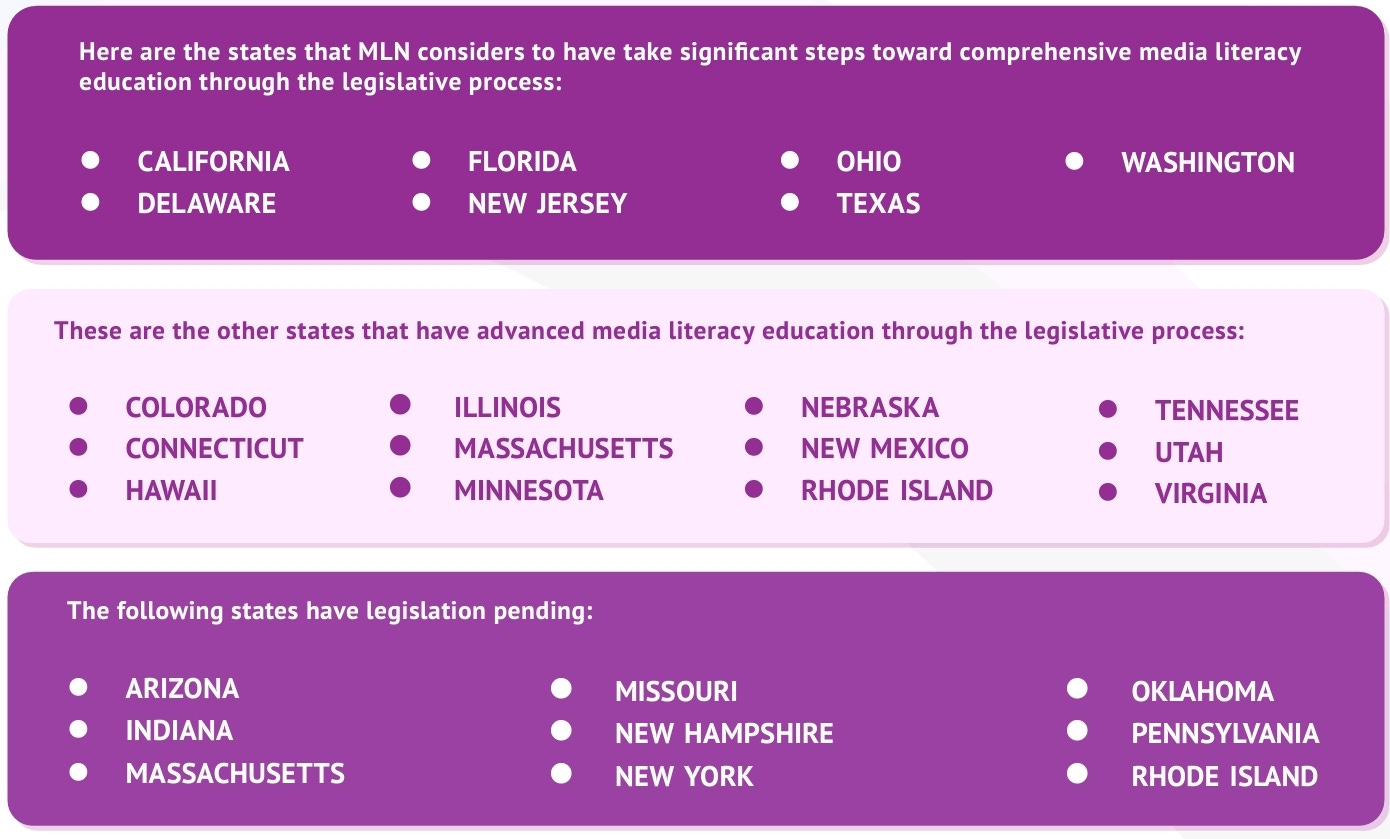
In Iowa, a “digital citizenship” curriculum has been in place since at least 2018, and the Iowa Department of Education references technology literacy as part of 21st-century skills. However, neither of these frameworks mandates the teaching of media literacy, nor do they include any references to it in the curriculum.
The Iowa GOP's relentless censorship leaves students vulnerable to misinformation. This oversight may stem from the rapid pace of technological change.
Technology evolves rapidly, and the digital citizenship plan developed in the mid-2010s failed to anticipate the current needs. As a result, it is likely already outdated today.
Given the dramatic changes over the past decade, it is crucial to educate today’s students and young adults on this pressing issue. What role have social media and the internet played in shaping our current landscape? Has it been nearly all-encompassing? If so, we must prioritize raising awareness about media literacy.

Media literacy involves the development of skills to access, analyze, evaluate, and create media across various platforms. The fundamental objective of media literacy is to help audiences maintain “critical autonomy in relationship to all media.”1 Despite its critical importance, the Reynolds administration's obsession with banning "divisive concepts" has severely hampered efforts to incorporate digital media literacy into Iowa's curriculum, effectively stifling the intellectual growth of our youth.
This lack of emphasis on media literacy is particularly troubling in light of recent events
Current policies shortchange students, denying them the essential skills needed to thrive in a complex digital landscape. By silencing critical discussions and limiting exposure to diverse perspectives, Governor Reynolds and her GOP allies are failing to prepare our children for the real world. Media literacy is not optional; it's a necessity for a functioning democracy.
Research clearly demonstrates that media literacy education enhances students' ability to spot misinformation, promotes civic engagement, and fortifies democratic values. In a state where voter turnout has often trailed behind national averages, these skills could be transformative—but only if the political will exists to embrace them.
Our hypothesis that media literacy interventions increase audiences’ knowledge of the media, criticism of the media, awareness of the influence of the media, while reducing media realism was supported. In addition, the hypothesis that media literacy interventions reduce risky or antisocial behaviors, increase negative behavioral beliefs about and negative attitudes toward such behaviors, and increase self-efficacy to avoid such behaviors was supported.2
Research shows that more than 65% of the information shared on social media is false or misleading. In a world where the truth is often obscured by a deluge of disinformation, equipping our students with the ability to navigate the digital landscape is paramount.
Picture a high school student stumbling upon a viral post loaded with misinformation; without proper media literacy education, they may find it nearly impossible to distinguish fact from fiction.
By silencing critical discussions and limiting exposure to diverse perspectives, Governor Reynolds and her GOP allies are betraying their responsibility to prepare our children for the real world. Digital literacy is not a luxury; it is a prerequisite for a thriving democracy.
Organizations like Media Literacy Now work to advocate for media literacy standards and keep track of progress. But their efforts are constantly thwarted by the Reynolds administration's regressive policies. By refusing to support these critical educational reforms, the Iowa GOP is leaving our students vulnerable to the perils of a post-truth world.
The Iowa Department of Education digital citizenship standards do not prioritize digital media literacy as defined above. Instead, they focus on securing hardware with passwords, avoiding copyright and trademark issues, and managing online relationships, leaving media literacy unaddressed.
Waukee is the fifth-largest school district in the state. I researched its digital citizenship curriculum and discovered only a limited emphasis on digital citizenship, with no specific requirements for media literacy. Furthermore, there is no recognition of the substantial amount of disinformation available online.
The online landscape evolves rapidly, and what was considered an acceptable curriculum five or ten years ago requires a comprehensive overhaul today.
The current standards are outdated, as discussed in my previous article. Students must be informed about evolving trends, but the reactionary politics of the Iowa GOP worsen this situation. Currently, insufficient action is being taken to address these challenges.
In recent years, nearly all aspects of our lives have moved online, highlighting the necessity for the general public to enhance their understanding of media literacy. The only formal media literacy education in the state is provided by the University of Iowa's College of Education. There is a pressing need for greater awareness and knowledge of this concept among the entire population.
Here are several actionable ideas to consider, though many more could be explored. I encourage readers to share their thoughts and ideas in the comments below.
Update the Iowa Department of Education standards to reflect instruction on media literacy. This sounds like an impossible task. But I believe in advocating for what is right, and demonstrate the benefits this could provide. We have to hold onto the hope that we have the possibility to change this in the future.
Establish a public outreach campaign directed at all Iowa residents.
Place special emphasis on older Iowans’ who are often targeted for scams.
It is imperative that Iowans demand more from their leaders, rejecting the Iowa GOP's politics of fear and ignorance. By prioritizing media literacy education, we can equip students and the public with the skills needed to navigate an increasingly complex information landscape, ensuring that truth, not manipulation, guides Iowa's future.
Media literacy is a crucial concept that all residents should grasp. Educated citizens enhance the attractiveness and competitiveness of our state, drawing in new employers, promoting economic growth, and helping to retain Iowa's brightest young adults.
The stakes are high: will Iowa lead the way in cultivating a new generation of critical thinkers, or will it succumb to the regressive policies of Governor Reynolds and her administration? The future of our democracy—and the promise of our state—hangs in the balance.
P Aufderheide
Media Literacy Around the World, 2018•taylorfrancis.com
J Commun
Author manuscript; available in PMC: 2013 Jun 1.
Published in final edited form as: J Commun. 2012 Apr 24;62(3):454–472. doi: 10.1111/j.1460-2466.2012.01643.x