

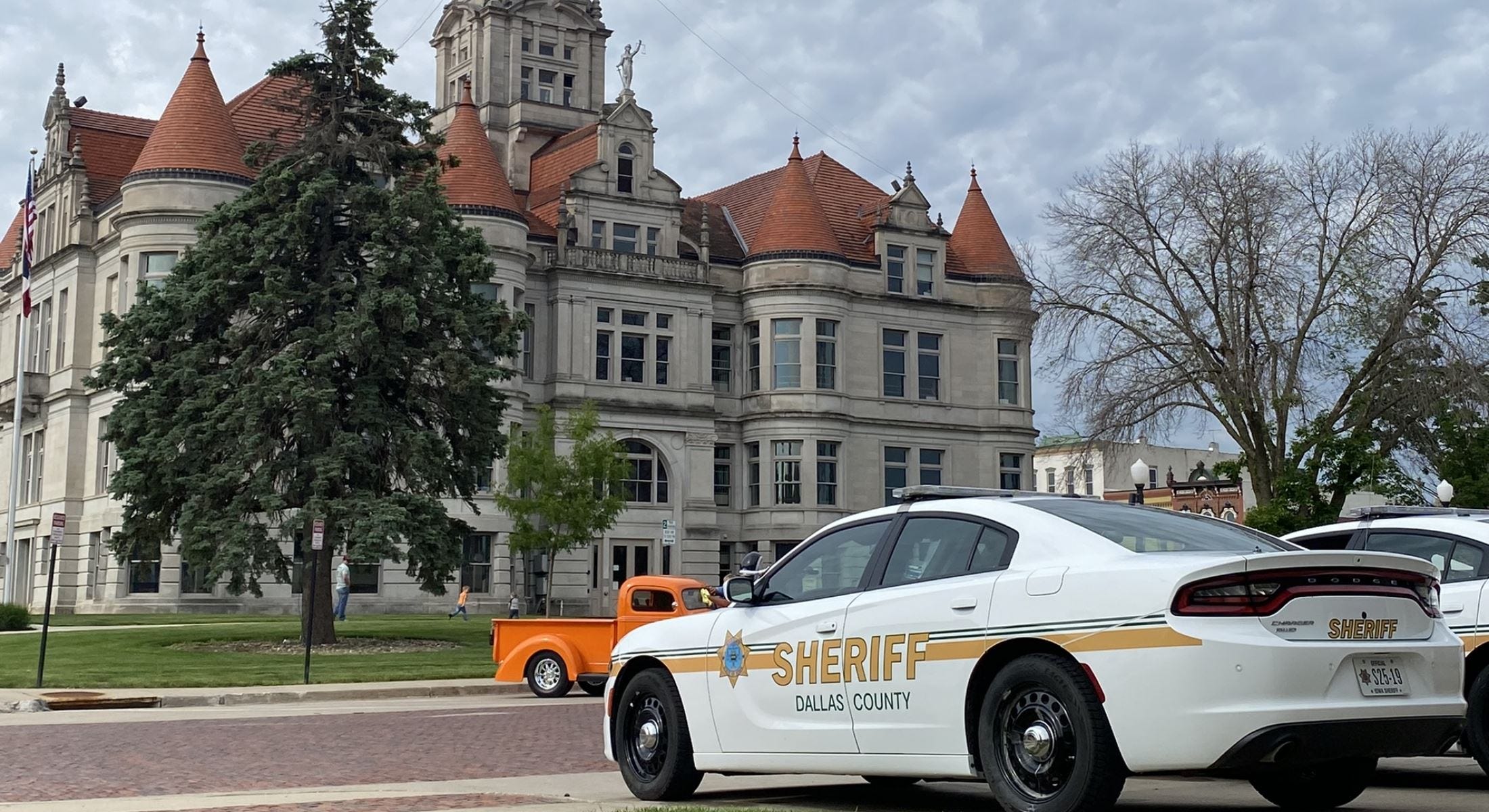
On the morning of July 1, Dallas County Sheriff Adam Infante emailed the city clerk in Perry with the last piece of a deal two police agencies had spent three weeks assembling.
“Here is our fully signed copy,” he wrote at 8:54 a.m. “We can file with Recorder if you want to handle State of Iowa? Chief, Sgt Bowers and Chief Maxwell will get with you next week and we move forward!”
Clerk Elizabeth Hix filed the agreement with the Iowa Secretary of State less than two hours later as filing number M519287. The next afternoon, Infante recorded it with the Dallas County Recorder and closed the thread. “I think we are all good,” he wrote.
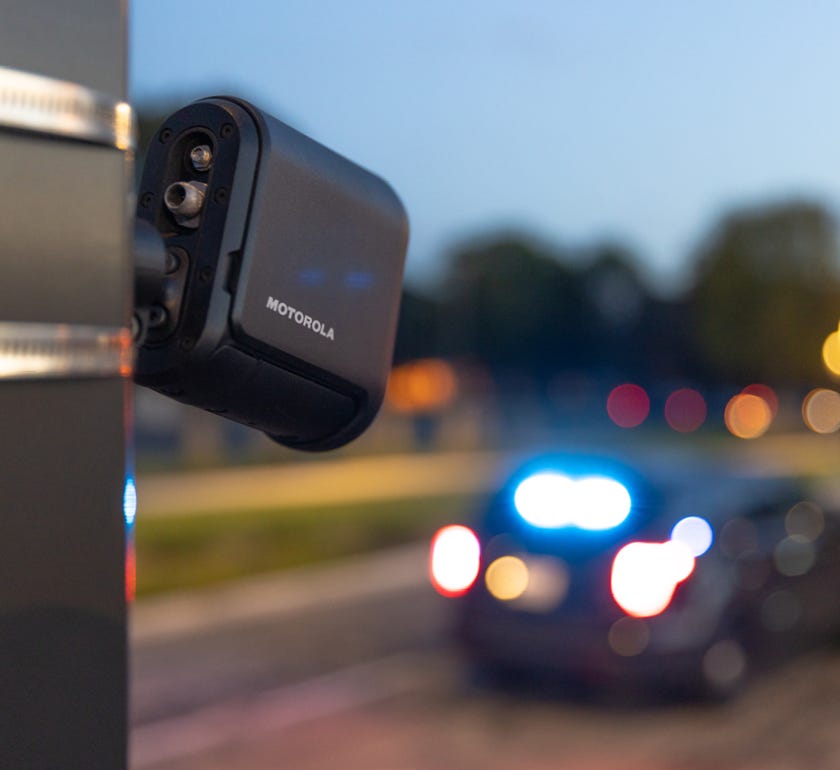
The deal was part of a planned Dallas County expansion of fixed, roadside automated license plate readers using Motorola equipment, with Perry as the first municipal partner. Dallas County already operated mobile plate readers mounted in sheriff’s vehicles; this project would add stationary cameras in participating cities. Sheriff Adam Infante wrote in June that the county planned to use “this same agreement with any other city that we work with on this project,” thanking Perry for “going first.”
Seven weeks later, the Dallas County Attorney’s Office said the Perry agreement was not in effect.
Assistant County Attorney La Luzerne confirmed the July 1 filing and its number, then added, “However, after review, it appears that the agreement was filed prematurely and Dallas County does not consider it to be in effect.”
The Perry plate reader agreement never came before the Dallas County Board of Supervisors for approval. In a July 29 email, Board Administrative Coordinator Melinda Harney told RDP, “The Board of Supervisors did not have any agenda items on this topic.” The board’s public record likewise contains no resolution, motion, or vote approving the Perry agreement.
A 28E is an agreement Iowa law allows public agencies to use to work together across jurisdictional lines.
The agreement between Perry and the Dallas County Sheriff’s Office covered “the installation and use of license plate reader (LPR) cameras.” Under it, the county installs, owns, operates, and maintains plate readers inside Perry’s city limits at county expense. Perry pays nothing. The county keeps the data, and Perry officers get access “upon approval of the County and at the County’s sole discretion.”
Perry Police Chief Jim Archer drafted the first version. “Here is what I came up with for a resolution and MOU with the Dallas County Sheriff’s office,” he wrote to city staff on June 10. Hix circulated a revised draft two days later covering “the automatic license plate readers that the County has and wants to install within City Limits.”
Infante replied within the hour, “We were in the process of drafting one as well, but this one is will work with some tweaking.” He copied La Luzerne, “I am CCing Ben on this for our legal advice.”
The county’s lawyers marked up the draft and returned it four days later. Infante’s cover note on June 16 is the clearest statement in the record of what the county was building.
“Our legal looked at the agreement and made some changes. I don’t see anything majorly wrong. Let me know your thoughts and we will go from there. FYI-we plan on using this same agreement with any other city that we work with on this project, thanks for going first and helping us work through it!”
The county’s edits tightened its own control. Perry’s version said police personnel “shall be granted access” to plate data collected in their city; the executed version conditions access on county approval “at the County’s sole discretion” and lets the county suspend a Perry officer “without prior notice.”
Perry city attorney DuWayne Dalen flagged it the same day. The change “seems cumbersome requiring the County to approve of anyone designated by the Perry Police Department to have access to the LPR data,” he wrote. “I don’t think it is a huge deal, but would think that the Perry Police Chief should be the one approving access at the City level.”
The clause survived. Archer, Hix told the county, “was comfortable moving forward.”
What Perry Approved
Perry’s council took it up at 9 a.m. on June 30. The minutes record a 4–1 vote, with Wolling, Andorf, Mahler and Klein voting yes and Shelly voting no.
Council members were told the cameras belonged to the county and would cost the city nothing.
As of August 21, Dallas County said no cameras had yet been installed or activated and that no allocation schedule or distribution list existed.
Then the council was told where the cameras came from. “So, the sheriff’s department renegotiated their contract with Motorola and in that rene renegotiation, they were able to get 90 uh LPR cameras thrown in the deal,” Archer said, according to the transcript. “So, they’re going to just distribute them throughout the county. So, we’re the first first city to get on board and like get this resolution done.” The Perry News attributed the same figure to Archer on July 16: the sheriff’s office “received 90 of the LPRs as part of its most recent contract negotiations with Motorola Solutions Inc.”
The number is one of the loose threads in this story. The only camera count in any record Dallas County has produced is 30.
The County Board’s Record
On Perry’s side, that action is on the record: Resolution 063026D, adopted 4–1.
On the county side, the agreement never went before the Dallas County Board of Supervisors for approval. Board Administrative Coordinator Melinda Harney told RDP that the supervisors “did not have any agenda items on this topic.”
Instead, the agreement was executed for “DALLAS COUNTY, IOWA (Dallas County Sheriff’s Office)” by Sheriff Adam Infante, with his administrative manager attesting to and notarizing it “by authority of its Sheriff Department.” No supervisor signed the agreement, and no board resolution approving it was attached.
Dallas County later said the agreement had been filed prematurely and was not in effect. It did not identify the missing step. On August 21, Assistant County Attorney Ben La Luzerne wrote that, “after review,” the agreement had been “filed prematurely” and that Dallas County did not consider it to be in effect.
The larger Motorola purchase had come before supervisors the previous year, but publicly, it was discussed as a communications and radio project, not as a license plate reader expansion.
On August 26, 2025, Sheriff Adam Infante told supervisors about a Motorola project involving radio towers, emergency communications, consoles, cybersecurity, and a price negotiated down to about $3.5 million. The board agreed to let the Sheriff’s Office apply returned payroll money toward the project. The official minutes do not mention license plate readers or cameras.
The official August 26, 2025, board minutes record that Infante was only asking for the unused payroll money that day and that “he will come back with an agreement.” The same passage ends, “Board consensus was to allow them to reclaim the money for their budget.”
A Motorola pricing page later produced by Dallas County shows something the public board discussion did not: “(30) L6Q LPR Cameras at no add’l cost” inside the larger Motorola package.
The county handled other law-enforcement 28E agreements differently in the same year. In January, supervisors adopted resolutions 2026-0012 and 2026-0013 with Dallas Center and Dexter by motion, each resolving to “grant the Chairperson of the Dallas County Board of Supervisors the authority to sign this contract.” Those agreements differ from Perry’s in one respect worth stating: under them the cities pay the county. The Perry agreement moves county equipment into a city at county cost.
Analysis: What an Iowa 28E Agreement Requires
Iowa Code Chapter 28E allows public agencies to enter agreements to exercise governmental powers jointly or provide services across jurisdictional lines. But the statute requires more than signatures. Section 28E.4 says “appropriate action by ordinance, resolution or otherwise pursuant to law of the governing bodies involved” is necessary before an agreement may enter into force. The agreement must also be filed with the Iowa Secretary of State.
For counties, Iowa law generally vests county powers in the Board of Supervisors, except where another law provides otherwise. Perry’s side of this agreement followed a visible governing-body process: its City Council adopted Resolution 063026D by a 4–1 vote. Dallas County’s board did not take up the Perry agreement, according to the board’s administrative coordinator, and no board resolution approving it appears in the public record.
The Dallas County Attorney’s Office has not said what specifically made the July 1 filing premature. Its statement that the agreement is not in effect, however, leaves a central unanswered question: what county-side action was required but did not occur?
Where the Cameras Came From
Dallas County did not start reading license plates in 2026. It started in 2023, with a $434,466.57 Motorola package of in-car and body cameras carrying a line item labeled “VIGILANT LPR,” plate-reader software for 28 patrol cars, and a year of access to LEARN, Motorola’s plate-search platform. The sign-off letter carries Infante’s signature and records that the funds were authorized “pursuant to Sheriff Adam Infante”; a companion form has the box checked, “No Purchase Order is required.” That November a sergeant signed the completion certificate: project “(28) M500 LPR Integrations,” work completed, “M500s collecting LPR data & feeding into LEARN.”
The fixed cameras Perry was promised come from a later, much larger transaction. This is where the public record and the vendor record diverge.
On August 26, 2025, the board’s published agenda listed “ITEM 12: DISC/ACTION RE: SHERIFF’S OFFICE / A) VEHICLE PURCHASE REQUEST / B) WORKSHOP & UPDATE.” Under that heading, according to the official minutes, Infante laid out a major communications project: Motorola would no longer service parts of the county’s aging radio system, and negotiations “started off at $6.2 million dollars, after many talks got it down to $3.5 million.” The E911 board had approved a $926,000 contribution; the sheriff had $1.5 million saved; he was asking supervisors for $650,000 in returned payroll dollars from an understaffed department that had given back $950,000 the previous year.
A sheriff’s communications specialist described the technology in radio terms: racks of equipment reduced to one, twelve channels of talk paths, and stronger cybersecurity “as emergency channels are attacked every day.” The package included new consoles and a five-year service warranty.
Then two sentences that matter more now than they did that morning. “Infante said today he is only asking for the unused payroll dollars, he will come back with an agreement,” the minutes record. And at the close of the item: “Board consensus was to allow them to reclaim the money for their budget.”
Consensus. Not a motion, not a recorded vote.
The words “license plate”, “plate reader”, “LPR”, “ALPR”, “L6Q”, “LEARN” and “VehicleManager” do not appear anywhere in the August 26, 2025 minutes.
They do appear in a Motorola pricing page Dallas County produced to RDP a year later, on August 21, 2026. It is titled “Pricing and Terms,” lists a “Dallas County Upgrade Solution” of radio and dispatch equipment at $3,077,164, and applies a “System Bundle Discount” of $702,796. Then, in the same table, this line appears,
“(30) L6Q LPR Cameras at no add’l cost — $0”
The system total is $2,374,368, plus $1,181,544 in maintenance for years two through five. Together, roughly $3.56 million, close to the figure Infante gave supervisors. A footnote required the signed master agreement to reach Motorola by Sept. 23, 2025.
The plate readers appear in the vendor pricing record as a no-additional-cost component of the larger Motorola package. RDP found no public board record identifying them as part of the project supervisors discussed. The county has not produced the executed master agreement, an order form, a packing list, or any receiving record for the L6Q cameras, and its August 21 letter says none have been installed or activated.
Nor has RDP found the return trip Infante described. No subsequent board record reviewed shows Infante returning to supervisors with an agreement tied to that Motorola project.
What supervisors got instead came five months later, in one line of budget-workshop notes on January 8, 2026, “Motorola 911 systems purchase has been completed in this fiscal year.” RDP asked Infante whether he returned to the board, and whether supervisors were told the package included plate readers. He did not respond before publication.
How a Camera Becomes Invisible
Dallas County also uses cooperative purchasing contracts, which allow governments to buy under terms negotiated through larger procurement systems. A separate December 2025 Motorola order produced by the county expressly cites a NASPO ValuePoint contract. The records produced so far do not establish that the 30-camera pricing page used that same purchasing vehicle.
The accountability question is whether local records and agenda language make the capabilities inside such purchase agreements visible enough for elected officials and the public to recognize what is being bought.
In Dallas County, the public item was a sheriff’s “Workshop & Update.” The public discussion was about radio towers, dispatch consoles, talk paths, and cybersecurity. The public action was a consensus to let the sheriff’s office keep money it had already saved. The plate readers appear one layer down, on a vendor pricing page, a $0 line item inside a transaction worth millions.
Support independent, records-driven reporting. Subscribe to Restoring Democracy’s Promise.
Thirty or Ninety Cameras?
Perry’s council was told 90. Dallas County’s produced records show 30.
RDP cannot resolve the gap from the documents in hand. The pricing page is a single unsigned proposal sheet; the executed master agreement it references has not been produced, and a final order can differ from a proposal. The records do not establish whether the two figures describe the same stage or scope of the project.
RDP asked the sheriff and Chief Archer how many fixed plate readers the county ordered, whether any have been delivered, and where the 90 figure originated. The article will be updated if a response is received.
What the County Says it Does Not Have
The August 21 letter is also an inventory of governance that does not yet exist.
Article VI of the agreement promises that “LPR data shall be retained in accordance with policies established by the County.” Asked for that policy, La Luzerne pointed to a state statute and wrote: “I have confirmed that there is no separate written or electronic LPR data-retention policy.” Asked for the configured retention setting, he wrote that no document exists and supplied a screenshot of the vendor console: archive all detections after 30 days and delete after 30 days. The county supplied a dashboard screenshot showing “3,132 / All agencies,” which Assistant County Attorney Ben La Luzerne described as the number of agencies with access to LPR data.
The dashboard itself does not make clear whether that number represents agencies specifically configured to receive Dallas County data or the broader Motorola network.
The letter adds three clarifications: none of the 187 cameras in the county’s existing fixed camera system have plate-reader capability; plate data is not stored on county servers but with the vendor; and no allocation schedule or distribution list exists.
The county wrote that it “is aware that the Perry Police Department has access to LPR data by way of the Motorola Vehicle Manager system” and referred questions about that access to Perry.
Perry’s own records show the city bought Motorola in-car plate-reader equipment in February 2025, before the 28E agreement existed.
City of Waukee: Same County, Same Month
Elsewhere in Dallas County, Waukee is going the other direction. The city announced on August 14 that it will not renew its contract with Flock Safety and is pausing its plate-reader program until the Iowa Legislature takes up the issue in 2027.
Asked what that means in practice, Police Chief Chad McCluskey answered on August 20,
“As we approach the expiration of our current contract in the coming weeks, we will work with the vendor to identify timelines for removal of their hardware. We also have not had any discussions with the Dallas County Sheriff’s Office related to ALPR use / placement in the City of Waukee.”
No record RDP has reviewed shows Waukee arranging plate-reader service through another vendor or through the county. In April, the same chief called the cameras “a critical resource,” according to the Des Moines Register.
That's two plate-reader decisions in one county in one month. One city is stepping back. In the same county, the first agreement for a planned municipal expansion is now described by county counsel as not in effect. Nothing in the record connects the two decisions.
What Happens Now
No fixed ALPR units have been installed in Perry. The agreement remains filed with the Secretary of State and recorded with the Dallas County Recorder, while the County Attorney’s Office says Dallas County does not consider it in effect.
What made the filing premature and whether Dallas County intends to revive the agreement, replace it or abandon the municipal rollout remains unanswered. No Perry plate reader agreement appears on the tentative agenda for the Board of Supervisors’ August 25 meeting.
What You Can Do
If your city or county uses automated license plate readers, ask local officials who approved the system, which agency owns and administers it, how long plate data is retained, which outside agencies can access it, and whether any intergovernmental agreements governing the system were approved in a public meeting.
For Dallas County residents, Board of Supervisors agendas and minutes are public records. Residents can also ask their city councils whether their communities have discussed or entered agreements with the sheriff’s office for fixed plate-reader cameras.
About This Reporting
Restoring Democracy’s Promise obtained the records in this article through Iowa Chapter 22 requests to the City of Perry and Dallas County.
Responses received after publication will be added and the story updated with an editor’s note recording the change.