

The Cross and the Capitol, Part 2: Divine Law or Iowa Law? The WCN Legislative Agenda Takes Hold
From healthcare restrictions to civil rights rollbacks and DEI bans, examining the specific bills reshaping Iowa in Christian Nationalism's image.
(Previously: The Cross and the Capitol, Part 1: Iowa's Church-to-Statehouse Pipeline | Part 3 Now Available: The Cross and the Capitol, Part 3: Mapping the Network – Iowa's Christian Nationalist Infrastructure Exposed)
Introduction: The Blueprint Becomes Law
Part 1 clearly hit a raw nerve. The large reaction confirmed what our investigation suspected: something fundamental is shifting in Iowa's political landscape. You felt it. We mapped the architecture of a formidable "Church-to-Statehouse Pipeline," arguing it's powered by White Christian Nationalism (WCN) – an ideology relentlessly working to fuse a specific, conservative brand of Christianity with American identity and raw state power.
But ideology isn't abstract. Its real teeth are felt when it's etched into law. The true test of this pipeline's power isn't just rhetoric; it's the legislative reality unfolding under the Capitol dome, impacting lives daily. While mundane legislative machinery churned out other deals, the real action – the ideologically driven edge – was elsewhere. This installment moves from the WCN blueprint to the legislative battleground, dissecting the specific bills – rammed through, pending, or facing fierce debate – that expose the agenda in action.
Let's be clear. This isn't business-as-usual conservatism. Our digging, backed by legislative records and source analysis, reveals a coordinated program. It targets healthcare access, fundamental civil rights, what gets taught (and who teaches it), and the state's very definition of who belongs. We'll break down these initiatives, verify their status, expose their mechanics, and connect the dots directly back to core WCN tenets. What emerges is a disturbing pattern: religious dogma muscle-testing its way past democratic norms and established rights.
1. Legislating "Conscience": The Medical Ethics Defense Act (SF 220 / HF 571)
One of the most significant battlegrounds is healthcare – the space where vulnerability meets expertise. Here, the proposed Medical Ethics Defense Act, formally Senate File 220 (SF 220) and House File 571 (HF 571)1, aims to erect broad legal shields allowing medical providers, institutions, and even insurers to refuse participation in, or payment for, healthcare services that clash with their "conscience."2
Status & Backing: This legislation is not hypothetical. It's an active threat. As of early April 2025, both bills remained on the Senate calendar3, with HF 571 having already cleared the Iowa House on March 30, 20254. Powerful religious lobbies, notably the Iowa Catholic Conference, have championed the bills vigorously, framing them as crucial for protecting moral integrity.5
Theological Cover & The Dangerous Loophole: Proponents wrap the bill in the language of religious freedom, arguing no one should be forced to violate deeply held beliefs6. But the bill's actual language goes much further. "Conscience" is defined so broadly it extends beyond religious tenets to vague "ethical or moral principles," even an institution's bylaws7. Advocacy groups like One Iowa consistently argue against such measures, characterizing them as creating a new "avenue to discriminate,"8 particularly against LGBTQ+ Iowans seeking gender-affirming care or individuals needing reproductive health services9. The most glaring danger lies in what isn't in the bill: no requirement for providers to disclose when they refuse care based on conscience10. This lack of transparency, critics fear, weaponizes "conscience" against vulnerable patients, especially in rural areas with limited options.
Constitutional Friction: While federal law offers limited conscience protections11, Iowa's proposal is far more expansive and opaque. It bumps hard against the principle, underscored by organizations like the Baptist Joint Committee for Religious Liberty (BJC), that one person's exercise of religious freedom should not harm others12. Allowing religiously motivated denials of standard care without clear notice risks violating the Establishment Clause's prohibition on government endorsement of religion within the healthcare sphere13.
The WCN Connection—This bill is a clear fit for the WCN playbook:
Privileging Specific Beliefs: Elevates subjective religious/moral objections over professional standards and patient needs.
Targeting "Out-Groups": Creates mechanisms to deny care disproportionately affecting groups often stigmatized by WCN ideology.
Eroding Secular Standards: Undermines the principle of equal access to care based on medical necessity, not provider dogma.
The persistent push for SF 220/HF 571 signals a determined effort to embed a specific, religiously derived moral code into Iowa's healthcare system, potentially at great cost to patients.
2. Redefining Identity, Rolling Back Rights: Senate File 418 (Gender Identity & Civil Rights)
Perhaps no legislation passed in recent memory so starkly embodies the WCN agenda's real-world impact as Senate File 418 (SF 418). Signed into law by Governor Kim Reynolds on February 28, 2025 (effective July 1, 2025)14. This law is nothing less than a state-sponsored attack on the legal existence and fundamental rights of transgender and nonbinary Iowans. It is theology ruthlessly translated into discriminatory law.
The Law's Cruel Precision: SF 418 fundamentally alters Iowa Code, defining "sex" exclusively by biology "observed or clinically verified" at birth and legally conflating this with "gender”. Its most destructive provision excises "gender identity" from the Iowa Civil Rights Act 15, ripping away protections against discrimination in employment, housing, education, and public life that had been Iowa law for nearly two decades 16. Iowa became the first state to legislatively repeal such established protections17. The bill also restricts K-6 discussion of gender identity and includes the chilling phrase "separate accommodations are not inherently unequal,"18 echoing historical segregation.
Doctrine into Law: The law's rigid binary definition directly imports a specific, conservative Christian interpretation of Genesis 1:27 ("male and female he created them"), a viewpoint preached by figures like Pastor Jesse Newman. Groups like The Family Leader backed the bill 19, framing it as protecting "women and girls"20 – a smokescreen, opponents argue, for targeting a vulnerable minority based on religious objections. This definition effectively designates transgender and nonbinary Iowans as an "out-group."
Human Devastation & Constitutional Challenge: The consequences are immediate and devastating. During hearings and in public comments, parents and youth expressed profound fear and heartbreak.
"Vote no on SF 418. I am the parent of a trans child in Iowa. Changing the Iowa Civil Rights to exclude transgender people is tantamount to legalized discrimination." - Parent Testimony via Public Comments, Iowa Legislature21
Another parent implored legislators, "Protecting my child is paramount... HF 583 [companion bill to SF 418] is not about fairness or justice. It’s about exclusion and harm."22 Speaking directly to the sense of erasure, Kayde Martin, a transgender youth testifying on his 18th birthday, said "Today I speak not just for myself, but for many transgender youths in Iowa... I stand before you fighting for the same basic civil rights that every Iowan deserves." 23This state-sanctioned erasure lands on a community already facing significant mental health challenges. Data show that in Iowa24:
34% of LGBTQ+ young people in Iowa seriously considered suicide in the past year, including 42% of transgender and nonbinary young people.
64% of LGBTQ+ young people in Iowa reported experiencing symptoms of anxiety and 47% experienced symptoms of depression.
SF 418 creates a direct clash with federal Equal Protection principles and Title VII interpretations (Bostock).25
Democracy Ignored: Crucially, this bill became law despite overwhelming public testimony opposing it26 and visible protests.27 During public comment periods, citizens explicitly raised concerns about religious ideology driving the bill. One concerned voter stated a desire to avoid living in a theocracy. A parent expressed that faith was being "weaponized" against certain people28. This disregard for public input underscores a key feature of the WCN project: the imposition of its agenda, regardless of democratic opposition.
The WCN Connection—SF 418 is a prime exhibit:
Enforcing Religious Doctrine: Writes a specific theological view of gender into state law.
Targeting the "Other": Identifies and strips rights from a specific group deemed outside the norm.
Authoritarian Imposition: Overrides democratic will and established rights to enforce ideology.
SF 418 stands as a grim landmark – demonstrating the WCN pipeline's capacity to turn religious belief into state-enforced discrimination29.
3. Dismantling Diversity: The Systemic Attack on DEI (SF 2435, SF 335, SF 507, HF 855, HF 856)
The WCN network's influence extends to reshaping Iowa's public institutions through a coordinated assault on Diversity, Equity, and Inclusion (DEI) initiatives. This multi-pronged attack reflects a core WCN strategy: challenging pluralism and reinforcing traditional social hierarchies.
The Legislative Onslaught:
Universities Gutted (SF 2435): Enacted May 9, 202430, this law effectively defunded DEI offices at Iowa's public universities31, forcing disruptive cuts.
House Follows Suit (HF 856): Furthering this effort, the Iowa House passed HF 856 with amendments on March 18, 202532, which similarly prohibits funding for DEI offices and staff at public universities and community colleges. The bill initially sought to extend this to private colleges via tuition grant restrictions, though that provision was later amended out in the Senate33.
K-12 & Colleges Targeted (SF 335): Proposed February 202534, aims to ban DEI programs, staff, and instruction on topics deemed controversial (sexual orientation, CRT)35.
Local Governments Next (SSB 1150 / SF 507): Introduced early 202536, seeks a comprehensive ban on DEI in cities and counties37.
Ideological Drivers & The "Seven Mountains": This campaign is fueled by the WCN narrative framing DEI as "woke indoctrination"38. Groups like Moms for Liberty39 and Turning Point USA40 relentlessly push this message. Commenter Evelyn Nikkel (PELLA PAC) exemplified this rhetoric, stating that adding protections for gender identity/sexual orientation in 2007 "loosed DEI indoctrination," linking it to various social ills41. Representative Steven Holt, arguing for HF 856, explicitly stated this view, asserting that DEI programs indoctrinate "young people to see everything through the prism of race," which he described as "incredibly destructive."42 This aligns with the broader WCN goal (often linked to the "Seven Mountains Mandate"43) of achieving dominance in cultural spheres like education.
Chilling Effects & Practical Impacts: The impact goes beyond budgets. Dismantling DEI removes support for marginalized students and employees44. Academics and free speech advocates warn these laws create a "chilling effect" on academic freedom, discouraging open discussion of inequality45.
"The elimination of DEI programs will significantly impact our ability to recruit and retain diverse talent.46" —Teresa Marshall, UI Faculty Senate President
This reflects an authoritarian desire to control institutional narratives47.
The WCN Connection:
Challenging Pluralism: A direct assault on efforts to create more inclusive public institutions.
Maintaining Hierarchies: Works to preserve existing social structures by removing equity initiatives.
Controlling Institutions: Imposes ideological conformity on universities, schools, and local government.
Utilizing "Woke" Narrative: Employs standard WCN rhetoric to attack DEI.
The systematic war on DEI demonstrates a strategic effort to remake Iowa's public sphere according to WCN dictates48.
4. Controlling the Classroom: Curriculum Mandates and Censorship (HF 391, HF 521)
The WCN agenda reaches directly into Iowa's classrooms and libraries, attempting to control what children learn and what information they can access – a long-term strategy to shape future generations.
Mandating Doctrine (HF 391): Proposed February 202549, would force schools to teach specific content on fetal development, including showing a high-definition ultrasound video50. This isn't neutral biology. It's inserting a specific pro-life viewpoint central to WCN theology, raising clear Establishment Clause red flags.
Unleashing Censorship (HF 521): Also proposed early 202551, seeks to remove obscenity exemptions for libraries and schools52. This could open the floodgates for challenges targeting books on LGBTQ+ issues, racial justice, or sexuality – topics often targeted by WCN-aligned groups. Librarians warn it undermines intellectual freedom53. This bill did not clear the 2nd funnel, so it's dead for at least this year.
The WCN Connection: Education is a key front in the WCN culture war.
Codifying Specific Religious Beliefs: HF 391 mandates curriculum reflecting conservative Christian views on life.
Controlling Education & Enabling Censorship: Both bills aim to restrict exposure to diverse perspectives. HF 521 provides the tool for censorship.
These legislative maneuvers reveal a clear intent to use state authority to control knowledge and enforce ideological boundaries in Iowa's educational institutions.
5. Inserting Religion: The School Chaplain Bill (HF 884)
Perhaps one of the most direct attempts to embed religious influence within public schools is House File 884 (HF 884), the controversial "Chaplain Bill.”54 Passed by the House and awaiting a final Senate vote (as of early April 2025), it perfectly illustrates the WCN objective of breaching church-state separation.
What It Does & The Qualification Loophole: HF 884 authorizes districts to use chaplains for student support. Critically, the House version explicitly prohibits requiring state certification (BOEE) for these chaplains. This deliberate circumvention of professional standards is a major red flag55.
The Senate 'Fix' & the NSCA Connection: A proposed Senate amendment requires certification from a "nationally recognized school chaplain credentialing organization.” Investigation reveals the primary such body is the National School Chaplain Association (NSCA), a Christian advocacy group actively promoting these bills with explicitly Christian-centric training56. The “fix” risks merely channeling placement through a specific religious group.
Constitutional Peril & WCN Alignment: Opponents forcefully argue HF 884 violates the Establishment Clause57.
"Authorizing untrained and uncertified chaplains... could gravely harm students, including those experiencing mental health crises, LGBTQ students, and other vulnerable individuals." — Heather Weaver, ACLU Program on Freedom of Religion and Belief58.
As Americans United for Separation of Church and State warned regarding a predecessor bill, “[HF 884] will undoubtedly violate the religious freedom of students who have the right to attend school free from religious coercion and to feel welcome in the school regardless of their religious beliefs”. This aligns directly with WCN goals: blurring church-state lines and inserting religious personnel into secular institutions.
Impact on Vulnerable Students & Texas Parallels: The lack of required training poses significant risks. State Senator Sarah Trone Garriott representing Senate District 14 is an ordained minister. This provides a distinct vantage point that others may not have. She opposes the school chaplain bill on several grounds. She emphasized that specific training needed. Licensure or certification is not required in the legislation59. She also identified the NSCA, named in the bill, as the only organization meeting the ammendment’s language and opposes the state’s involvement in religious matters.
“This is an advocacy group associated with Oral Roberts University with the mission of putting evangelical christian chaplains in public schools….Because that’s what HF884 is really all about, using our public schools to evangelize and convert children to a particular religion—and letting out of state groups cash in while they do it.”—State Senator Sarah Trone Garriot60
Most Texas school districts rejected hiring chaplains because of these concerns, despite the state implementing a similar law in 202361.
Nikolas Nartowicz with Americans United for Separation of Church and State warned regarding a predecessor bill, “[HF 884] will undoubtedly violate the religious freedom of students who have the right to attend school free from religious coercion and to feel welcome in the school regardless of their religious beliefs”62.
HF 884 is not merely about support staff. It's a maneuver to inject specific religious perspectives into public education, bypassing professional standards and risking constitutional violations.
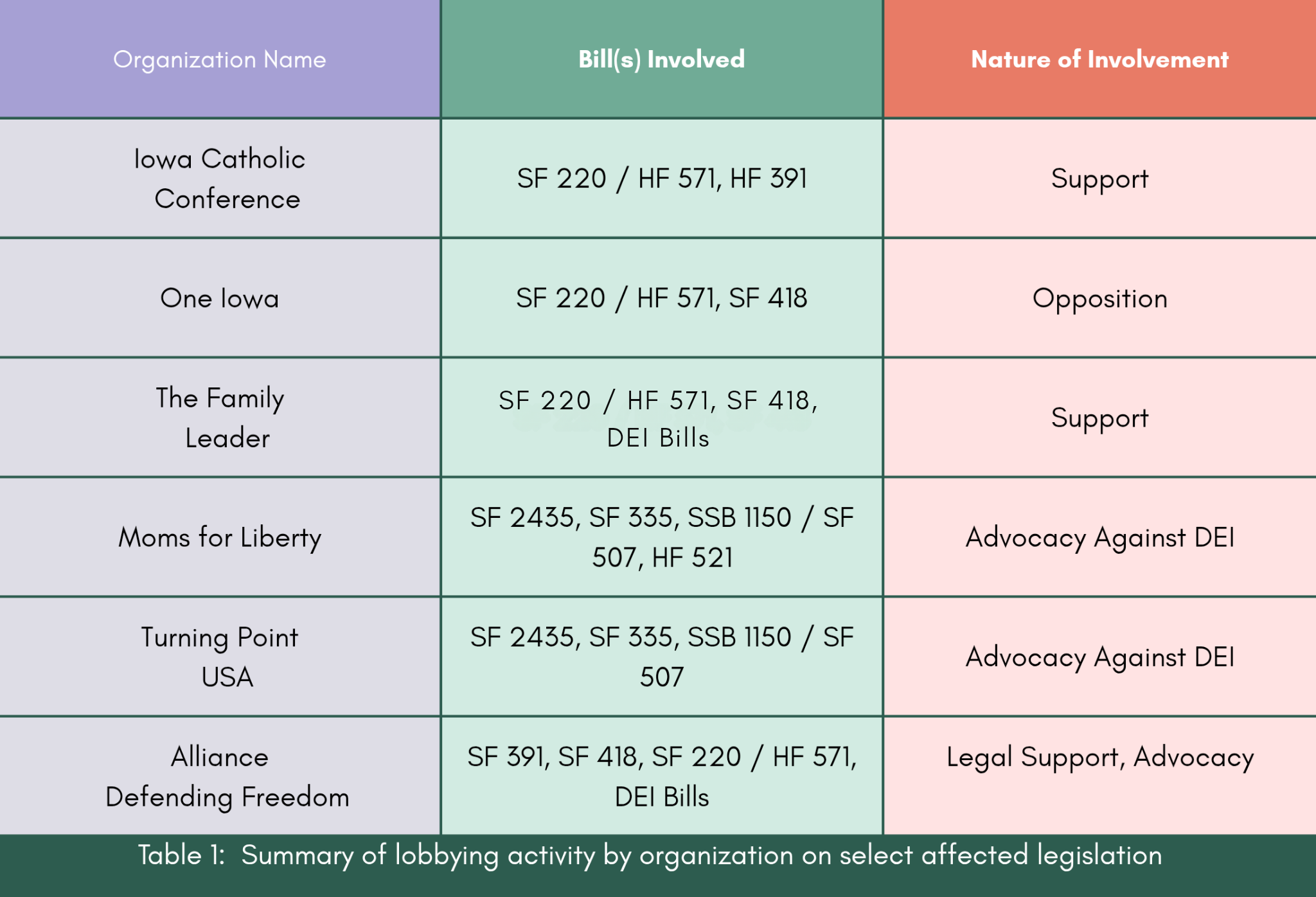
6. The Network's Architecture: Alliance Defending Freedom (ADF) & The Coordinated Push
While local Iowa groups like The Family Leader are visible drivers, this legislative agenda is significantly amplified by powerful national organizations, most notably the Alliance Defending Freedom (ADF)63.
ADF's Strategic Role: ADF's fingerprints are often visible. They've litigated in Iowa on abortion64 and gender issues65. Their national positions provide the template and legal arguments for bills like SF 220/HF 571, SF 418, and education mandates. Connections to groups like ALEC66, whose model policy likely influenced Iowa's university DEI ban, point to a coordinated national-state strategy.
Providing Legal & Rhetorical Cover: ADF excels at providing model legislation and arguments framed as "religious freedom," lending a veneer of constitutional legitimacy to policies rooted in WCN ideology. They are a critical part of the national infrastructure enabling these state-level pushes.
7. Connecting the Dots: A Coherent Agenda, Not Isolated Bills
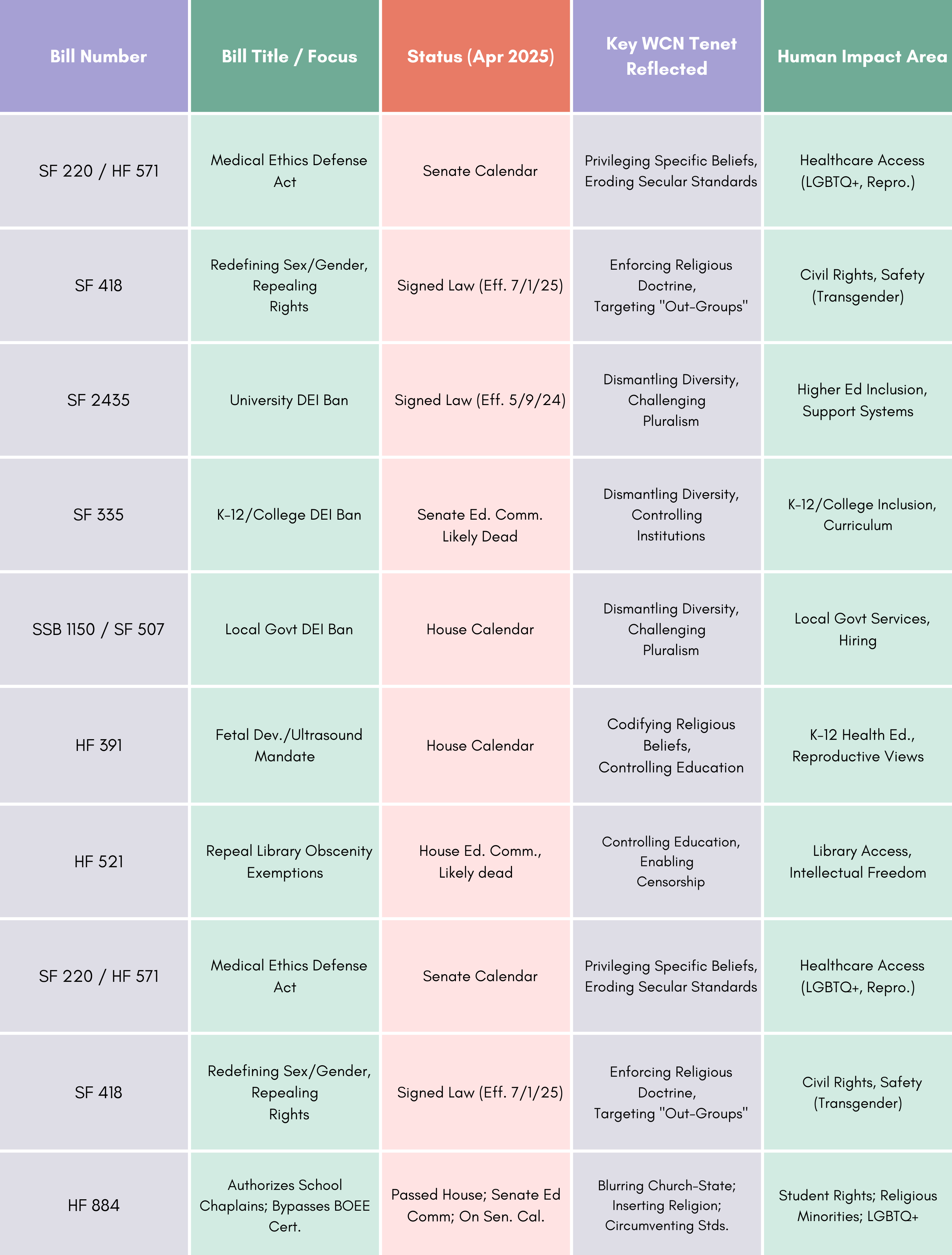
Viewed together, these legislative actions – restricting healthcare based on religious belief (SF 220/HF 571), rolling back LGBTQ+ civil rights (SF 418), systematically dismantling DEI (SF 2435, SF 335, SF 507, HF 856), and controlling educational content (HF 437, SF 519)67. In addition, influencing youth public health based on moral objections (SF 304/HF 384)68, inserting religious personnel into schools (HF 884), and promoting specific religious texts in public schools (SF 510/HF 845)69 – form a coherent pattern. They are not disparate issues but interconnected parts of a broader legislative program fueled by White Christian Nationalism. This program seeks to:
Codify Specific Religious Beliefs: Embed conservative Christian views on gender, sexuality, life, and morality into state law.
Marginalize "Out-Groups": Reduce the rights, visibility, and protections for LGBTQ+ individuals and potentially other minority groups.
Control Institutions: Assert ideological control over public institutions like universities, schools, and potentially healthcare systems.
Challenge Pluralism: Push back against diversity and multiculturalism in favor of a more homogeneous, Christian-centric public square.
The Authoritarian Echo
This legislative pattern also echoes the authoritarian tendencies inherent in WCN, discussed in Part 1. The attempts to control information, define identity by decree, limit bodily autonomy, install religious figures while bypassing professional standards, and roll back established rights demonstrate a willingness to use state power to enforce ideological conformity and social control. It reflects a movement less interested in democratic debate and compromise, and more focused on imposing its vision, viewing dissenters as threats.
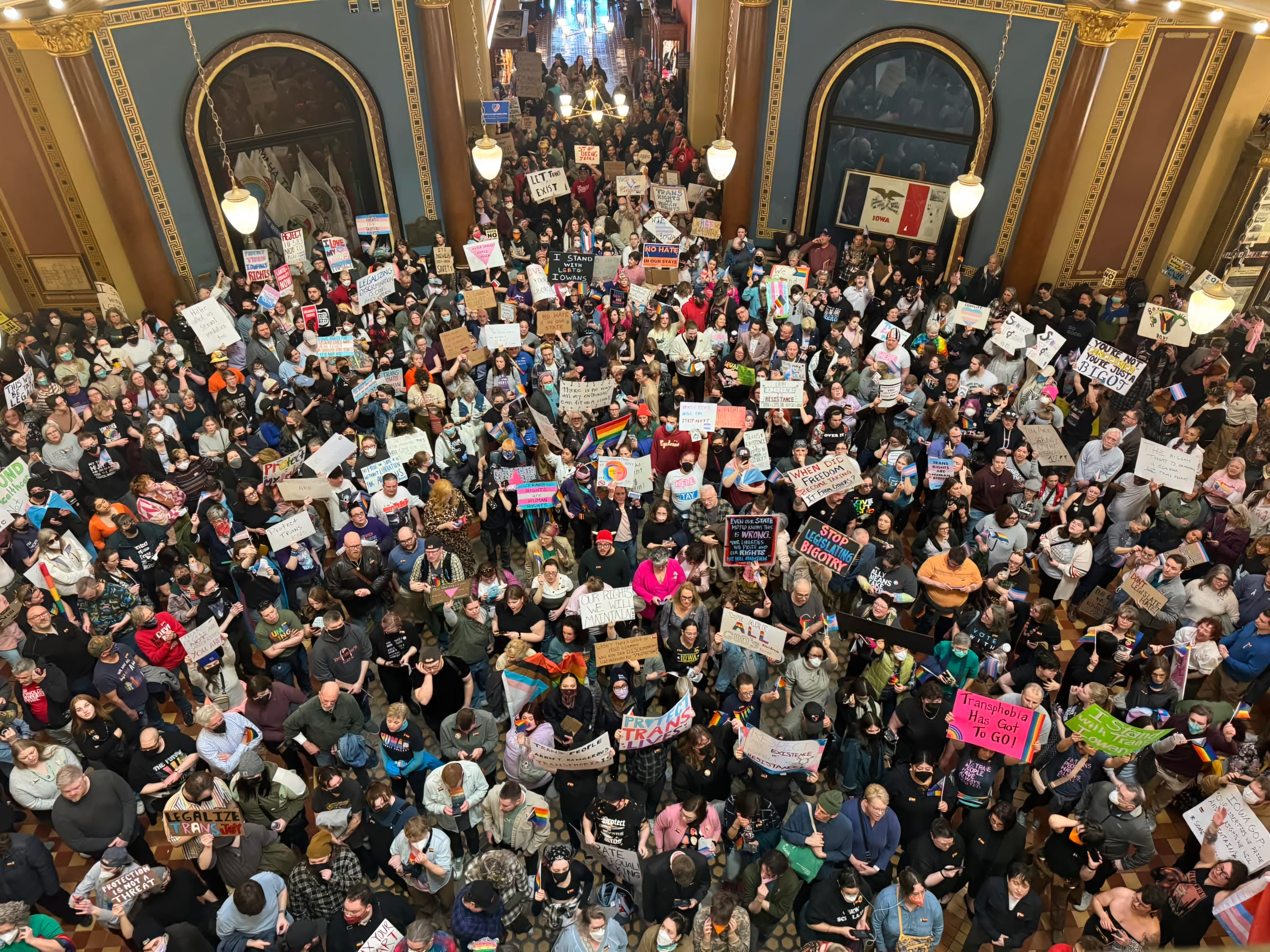
The speed and breadth of these pushes, often despite significant public opposition70, speak to the effectiveness and influence of the network driving them. The arguments used – appeals to "religious freedom," "parental rights," fighting "woke indoctrination," protecting "women and girls" – are standard talking points within the national WCN movement.
8. Conclusion: A Pattern Confirmed, A Future Contested
The pattern is confirmed. The evidence laid bare. The specific bills dissected here reveal a coherent, multi-front assault designed to embed the core tenets of White Christian Nationalism into the legal and institutional fabric of Iowa. This legislative program systematically marginalizes vulnerable communities, codifies narrow religious doctrines, dismantles inclusive structures, and seeks to control knowledge – all while cloaked in familiar political rhetoric. The determination shown, often overriding public dissent, exposes the network's effectiveness and its chilling disregard for democratic processes.
This trajectory carries a deeply authoritarian undertone, challenging the very foundations of a pluralistic society. The human toll – measured in stripped rights, potential denial of care, diminished educational opportunities, threats to church-state separation, and pervasive fear – is not abstract. It is real and growing in Iowa.
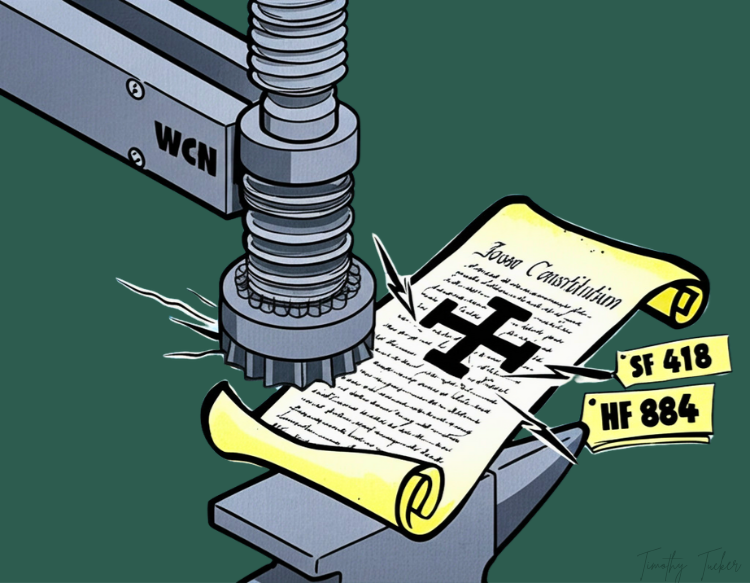
The laws are changing Iowa, piece by painful piece. But how exactly does the network orchestrating this transformation operate? Who holds the purse strings? Who pulls the levers of power behind the scenes? Understanding the legislative output is critical, but it's only step one. Discuss these findings. Confront your representatives. Demand accountability. The fight for an inclusive, democratic Iowa requires informed and active citizens. Stay vigilant.
In Part 3, we trace the money and map the power brokers, diving deep into the infrastructure of influence powering Iowa's Church-to-Statehouse pipeline.
Subscribe below so you don't miss it.
9. Footnotes
Iowa Legislature Public Comments, SSB3092, Nikolas Nartowicz, State Policy Counsel, AUF